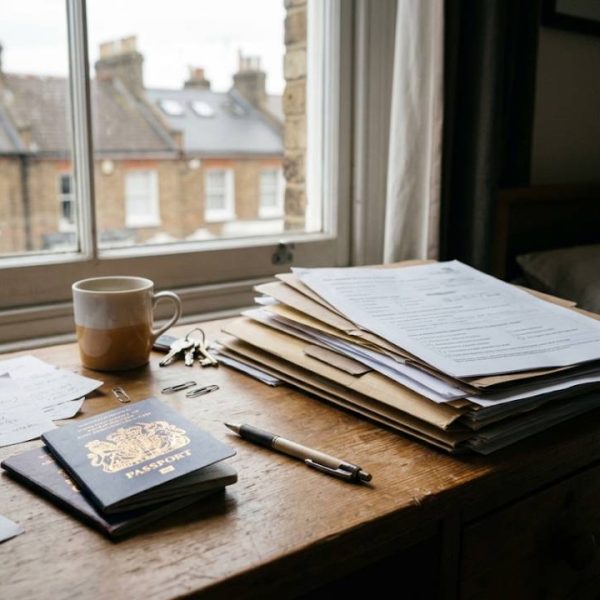
A UK visa application often depends on papers written in Arabic: birth and marriage certificates, bank statements, police certificates and employment letters. The Home Office reads English, so every foreign-language document needs a translation that meets specific standards. Small errors can delay a decision, so it pays to get the translation right the first time.
What the Home Office expects
UK immigration rules ask for a full translation of each document that is not in English or Welsh. The translation must be accurate and complete, and it must include a statement from the translator confirming that, along with their name, contact details and the date.
The translator's statement is a required part of every translation. A translation without it may be refused, even if the words are correct.
Official guidance on these requirements is published on GOV.UK, where you can check the current rules for the visa route you are using before ordering any work.
Arabic is written right to left
Arabic runs from right to left, and many documents mix Arabic text with Latin letters and numbers. A good translation keeps the structure of the original: headings, tables, stamps and signatures appear in the same order so the reader can compare both versions side by side.
Describe stamps and seals in brackets, and mark illegible handwriting rather than guess.
Names are the biggest risk
Arabic names can be written in Latin script in several ways. Mohamed, Mohammed and Muhammad refer to the same name, yet an immigration officer who sees different spellings across documents may ask questions. Always use the spelling in the passport for every document.
Family names, fathers' names and grandfathers' names also follow different patterns across countries. Tell the translator how the name appears in the passport so that the structure stays consistent.
Dates, calendars and numbers
Some Arabic documents use the Hijri calendar, others the Gregorian one, and many show both. The translator should keep both dates when they appear and give the Gregorian equivalent clearly. Numbers may use Eastern Arabic digits, which should be converted carefully and checked twice.
Country differences
Arabic is spoken in more than twenty countries, and documents differ in format, wording and issuing authority. An Egyptian birth certificate looks nothing like a Moroccan or Saudi one. A translator familiar with the country of origin recognizes standard sections and abbreviations.
Always tell the provider which country issued the document.
Regional variety is not unique to official documents. A game or app released across the Arabic-speaking world meets the same spread of dialects, conventions and expectations, and a version prepared for one country can feel foreign in another. This is why video game localization adapts dialogue, visuals and store text market by market instead of treating one language as a single uniform block. Products shaped around local habits earn trust faster, whether the reader is an immigration officer or a player.
Choosing the provider
Look for native Arabic speakers with experience in immigration paperwork. A reliable service for Arabic translation services can supply certified translations that follow the standards of the receiving authority and include a second review of names and dates.
Ask for a clear quote that shows certification, delivery format and turnaround time.
A related guide
If you are preparing a full application, our article on translation for a UK visa explains which documents usually need translation, how certification works and what to check before you submit.
Scans and copies
Provide clear scans in color, with all pages, including the back side if it has stamps or text. Cropped edges and faint stamps lead to gaps in the translation. If a page is unreadable, say so instead of letting the translator guess.
Keep the original documents safe, since you may need to show them at an appointment.
Timing
Plan translation time into your visa timeline. Certified translations usually take a few working days, and urgent orders cost more. Order all documents at once so that the style and name spellings stay consistent.
Bank statements and financial records
Bank statements are long and full of numbers. Ask the translator to translate the headings, account holder details and transaction descriptions, and tell them if the visa route requires every page. Check that currencies, dates and balances match the source exactly.
Employment letters and certificates
Employment letters, degree certificates and sponsorship papers are checked closely by caseworkers. Make sure job titles, salaries and dates are translated exactly and that company names keep their official spelling. If a letter includes a company stamp or letterhead, the translator should describe it so that the reader knows it appears on the original.
Where possible, ask the issuer for a copy that is both signed and stamped. A clear original makes for a clearer translation and fewer questions later.
Checking the translation before you submit
Read the English text next to the Arabic original, or ask a trusted bilingual contact to do so. Compare names, passport numbers, dates and amounts line by line. If something looks wrong, ask the translator to fix it before you send the application.
Confidentiality
Immigration documents contain sensitive personal information. Confirm that the provider keeps files secure, uses them only for the translation and deletes them when asked.
Common reasons for rejection
Missing translator statements, incomplete translations, inconsistent names and unreadable scans are the most frequent problems. All of them can be avoided with a short checklist before submission.
Closing thoughts
Translating Arabic documents for a UK visa is straightforward when you plan ahead. Use the passport spelling, ask for certification, provide clear scans and work with a specialist. Your documents will then support your application instead of slowing it down.